
Backrs Guide to Landing a Great Internship
A strategic, step-by-step approach to finding, landing, and making the most of your internship experience.
Landing a great internship is one of the most important things you can do in college. It builds your resume, expands your network, clarifies your interests, and dramatically improves your odds of landing a strong first job after graduation.
But the process is harder than most students expect. Competition is fierce, the best opportunities often go unadvertised, and success requires more than just submitting applications online.
This guide gives you a strategic, step-by-step approach to finding, landing, and making the most of your internship experience.
Your complete internship search playbook
Top Insights
The right experience can open multiple doors. In order of importance:
- Signal achievement. Ironically, the most important part of having an internship is getting one—it signals that employers find you desirable. The second most important part is demonstrating strong performance once you're there. (See Backrs Standards by Track for benchmarks of success.)
- Increase your line of sight to a full-time job. Many internships are extended interviews.
- Expand your network. Every experience broadens your access to professionals who can advise, vouch for, or refer you.
- Build useful, relevant skills. You'll learn practical tools, workplace habits, and communication skills that carry forward.
- Clarify your interests. You'll discover what types of environments, people, and problems fit you best.
What are NOT good reasons to get an internship?
- To make money. If you need income, that's valid—but treat pay as a bonus, not the purpose. The long-term ROI of experience dwarfs short-term wages.
- To have fun or go somewhere cool. You'll hopefully enjoy yourself, but the goal is to set up a 40-year career, not an 8-week vacation.
Advice from a Pro
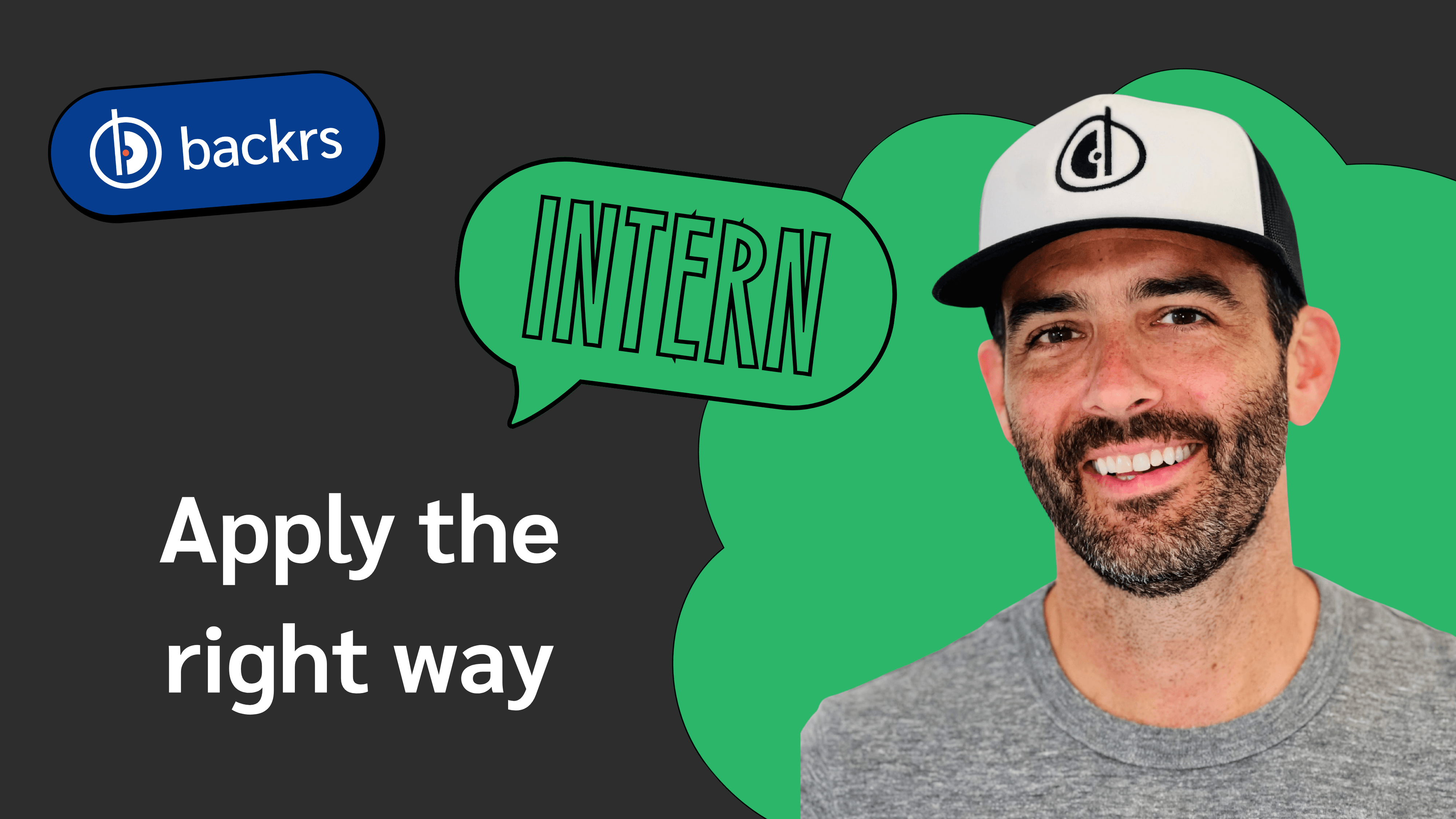
Backrs co-founder Tom Latkovic brings decades of experience hiring and evaluating talent. He is a former McKinsey Senior Partner, has founded multiple companies, and over the course of his career has directly hired hundreds of people and been responsible for thousands.
In this video, he explains:
- Why blindly applying on LinkedIn or Handshake rarely leads to internships
- How to build a “team” of mentors, professors, and peers to support your search
- Why you should target employers instead of job postings
- How to use alumni and connections to get your resume seen by a real person
- The best questions to ask professionals when seeking guidance
- What to do if you can’t land a formal internship
- And more
Top Internship Myths
Reset your expectations before you begin your search.
The Reality
What to Do Instead
The Bottom Line:
The Reality
What to Do Instead
The Bottom Line:
The Process
A step-by-step framework for finding, landing, and making the most of your internship.

How to Set It Up
What to Track
The Bottom Line: