Career Tracks: What They Are and Why They Matter
Career paths are important to understand, but career tracks are arguably even more so. Tracks exist across paths, and they play a key role in job satisfaction.
Introduction to Career Tracks
Career tracks are academic and professional trajectories that lead to certain levels of pay and growth potential.
The decisions you make--starting even before high school--often determine which track you may end up on. This track will influence many of your life’s outcomes: what kind of house you can afford, how much you travel, the amount of savings you put away, and more. Most people change careers several times in their lives, but it is rare to change tracks.
Think of Tracks Like Subway Lines
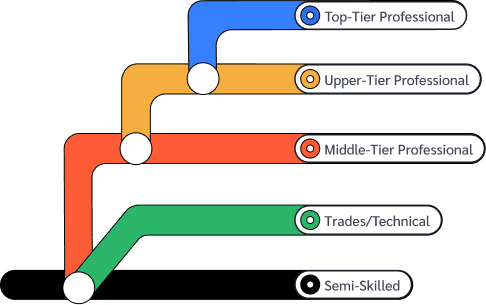
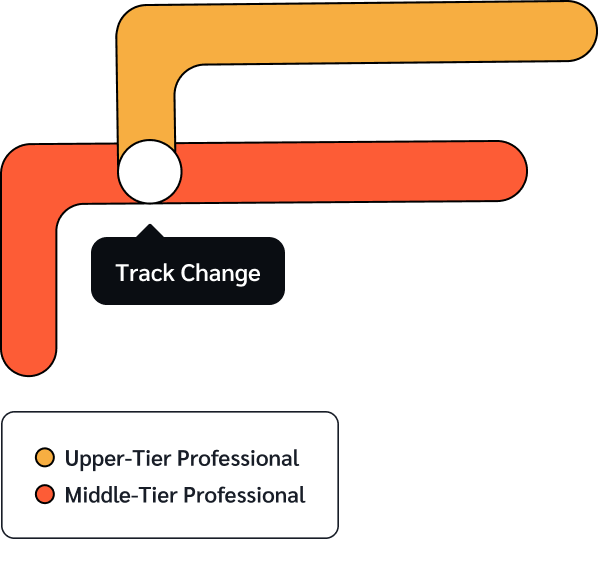
Imagine a subway map. There are specific inflection points where you can change tracks, but it takes planning and careful timing.
Going from middle-tier to upper-tier might look like enrolling in graduate school, taking on new responsibilities at work, or gaining a new certification in your field.
Higher Isn't Always Better
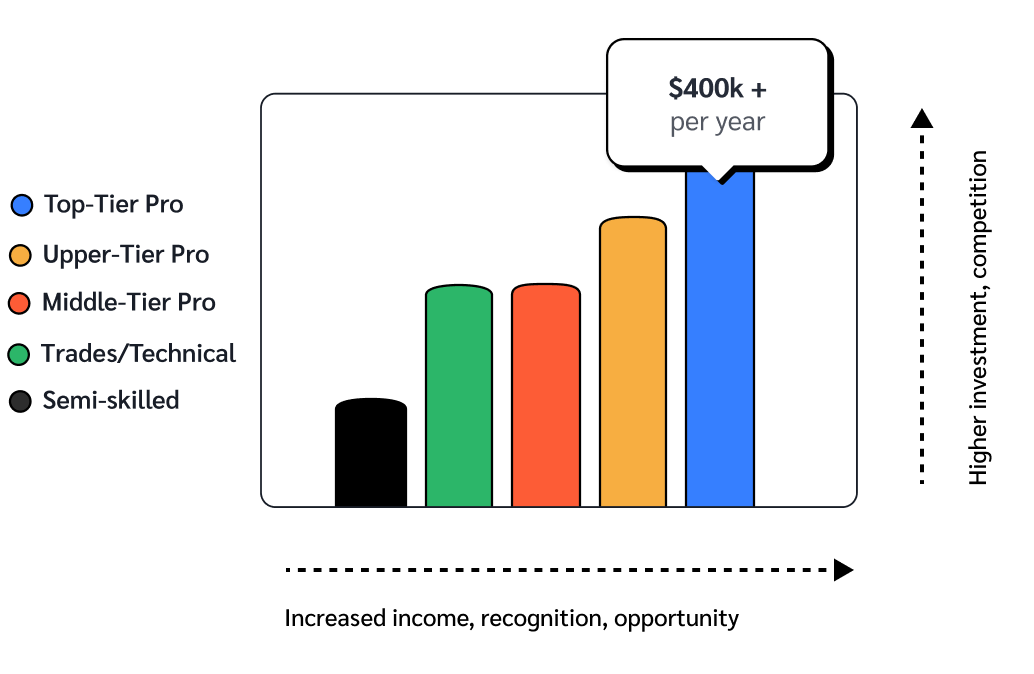
“Higher” tracks are more selective, offer greater pay, and will give you more opportunity to make decisions, grow, and lead.
That doesn't necessarily mean they're better. Higher tracks often require larger investments of time and money and greater amounts of sacrifice in other areas of life.
Get To Know Each Track
The Semi-Skilled Track
Semi-skilled jobs are careers that don’t require much education or special training. Unskilled jobs often involve basic, hands-on tasks like working as a cashier, janitor, or fast food worker. These jobs usually pay between $25,000 and $30,000 a year. Semi-skilled jobs need some training or experience but not a college degree. Examples include truck drivers, administrative assistants, and customer service workers, who earn around $35,000 to $45,000 a year. These jobs are important, but they don’t offer the same opportunities as jobs that require more skills or education.
There are a few benefits to these jobs. You can start working right after high school, and you can find these kinds of jobs in many places. But there are also major drawbacks. The pay is low, it’s hard to move up, and the work can be physically tiring. People in these jobs often have a hard time paying for things like rent, food, and medical care. These jobs also don’t usually come with good benefits or long-term job security, which makes it hard to save money or plan for the future.
Many people in these roles never finished college, but a surprising number actually did go to college or even earned a degree. Still, for different reasons, they ended up in low-paying jobs. While these careers are common, they aren’t great long-term choices for people who want financial security or room to grow. Young people should try to find careers that give them more chances to succeed and build a stable future.
The Trade/Technical Track
A trades or technical career path involves getting special training in fields like plumbing, electrical work, welding, HVAC systems, and healthcare jobs such as medical assistants, radiologic technologists, and dental hygienists. It also includes high-demand fields like advanced manufacturing, automotive technology, robotics, and precision machining. These careers often require training through trade schools, apprenticeships, or community college programs, but not a traditional four-year degree.
There are several benefits to this path. Skilled trades offer good starting pay—usually between $40,000 and $55,000—and with experience, earnings can rise to $55,000 to $85,000, and sometimes even up to $110,000 or more. These jobs often come with strong job stability because there’s always a need for people with hands-on skills. You also spend less time and money in school compared to a four-year college. While the pay gives you a chance to build financial stability, it’s not massive. However, many people in these careers boost their income by starting their own businesses, which can lead to much greater earning potential and long-term wealth.
There are some challenges, too. The work can be physically demanding, sometimes risky, and it often requires keeping up with new technology and methods in your field. Still, many people find this kind of work rewarding because they get to solve real problems, work with their hands, and see the results of their effort.
Middle-Tier Professional Track
Middle-tier professional careers include jobs like paralegals, some attorneys, project managers, marketing specialists, human resources managers, nurses, teachers, many sales jobs, and IT support specialists. These roles usually require a bachelor’s degree and sometimes extra certifications or training.
Some benefits of this career path are steady pay, chances to move up, and a good work-life balance in many jobs. Starting salaries are usually between $40,000 and $50,000. With experience, pay can go up to $55,000 to $100,000, and in some jobs, as high as $120,000. This level of income allows for some financial security and saving, but it may not lead to major wealth unless combined with something like starting your own business.
There are a few downsides. Some careers require ongoing education or new certifications to stay competitive. In certain fields, there may be more people looking for jobs than there are positions available. Also, moving up to higher-level roles might require going back to school or earning an advanced degree.
Still, many people enjoy these careers because they offer clear paths to grow, a wide range of job choices, and the chance to make a real difference—especially in jobs like nursing, teaching, and tech support.
Upper-Tier Professional Track
Upper-tier careers include selective fields like business leadership, consulting, accounting, engineering, tech, corporate law, medicine, and top roles in education. These jobs often require advanced degrees, years of experience, and a high level of skill. Starting pay is usually between $80,000 and $200,000, with experienced professionals earning $150,000 to $350,000. In some careers, pay can exceed $500,000. This income allows for a wealthy lifestyle and long-term wealth building.
These professionals often have major decision-making power and are highly respected in their industries. Many rise to leadership positions and earn recognition for their work.
However, these jobs come with big demands. The pressure, long hours, and responsibility can affect health and work-life balance. Success also requires ongoing learning and staying current in your field. Even with these challenges, many find the rewards, influence, and sense of achievement make it all worthwhile.
Top-Tier Professional Track
Top-tier careers include the most competitive and prestigious jobs—like management consultants, investment bankers, elite lawyers, top researchers, and specialist doctors or surgeons. These roles require the best education, advanced degrees, and a track record of high achievement.
Pay in these careers is exceptional. Starting salaries are usually between $90,000 and $200,000, rising to $250,000–$500,000 with experience, and sometimes over $1 million. This creates the chance for a wealthy lifestyle and major long-term financial success.
These roles also bring status and respect, plus the chance to work on challenging, high-impact problems. The strong professional network built in these fields can lead to even more opportunities.
But these jobs are intense. They often require long hours, constant travel, and high levels of stress. The pressure to perform is nonstop, and it can affect your health and personal life. Staying at the top means always learning and improving. Even with the demands, many people find the rewards, impact, and prestige worth the effort.
How Tracks and Paths Intersect
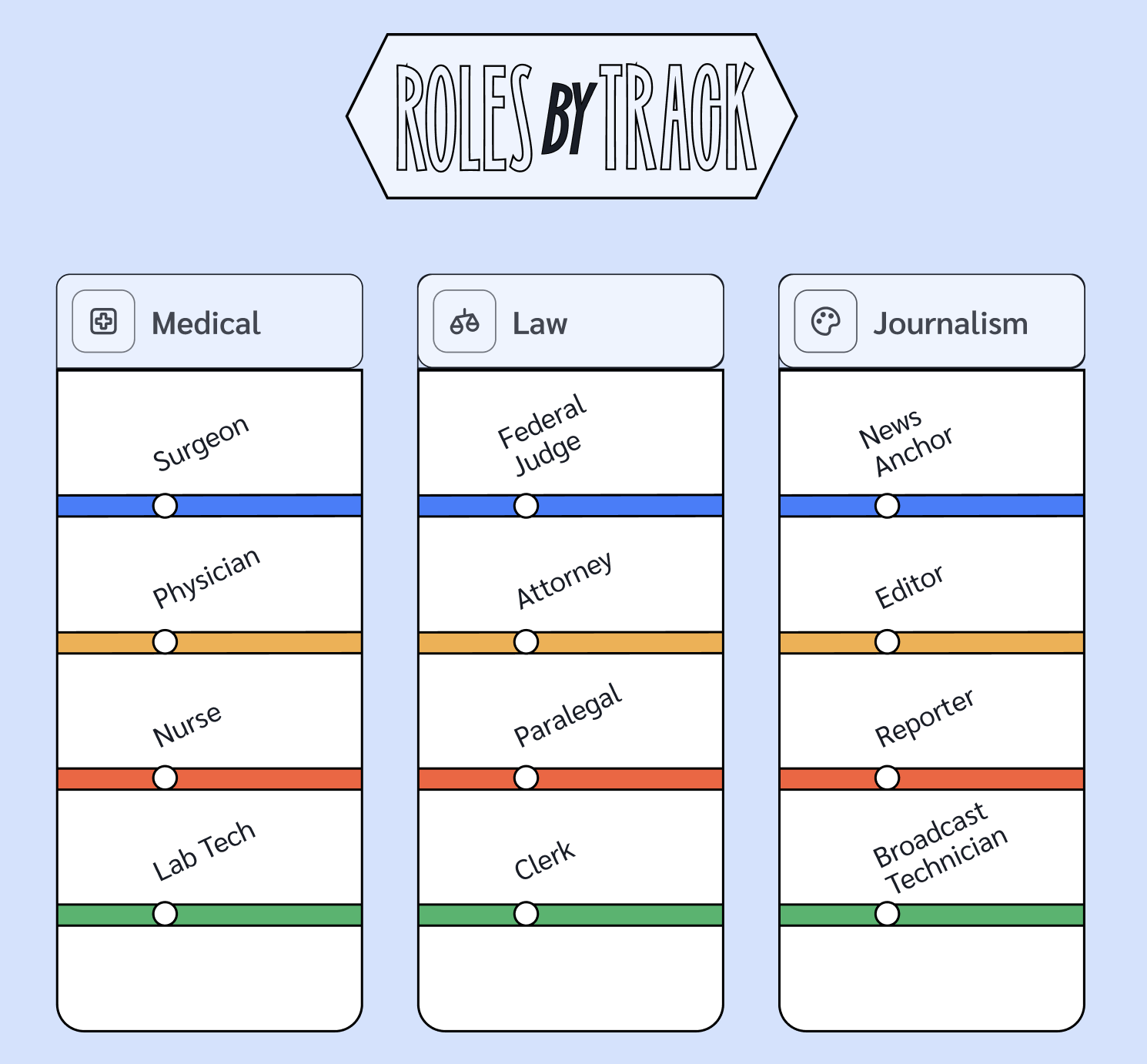
Your track is the overall level of career you're aiming for—like Upper-Tier Professional or Trade/Technical—based on things like income, recognition, and education required.
Your path is the specific lane within that track—like Nursing, Accounting, or Software Development—that shapes the kind of work you’ll do and how you’ll grow over time. Most paths includes jobs across tracks, but some paths are mostly trades/technical while others are mostly upper tier and top tier professional.
You target a track to match your life goals. You pick a path to match your interests, strengths, and where you find meaning.
Most people switch paths three or more times. Less than 10% of people switch tracks after their early 20’s.